
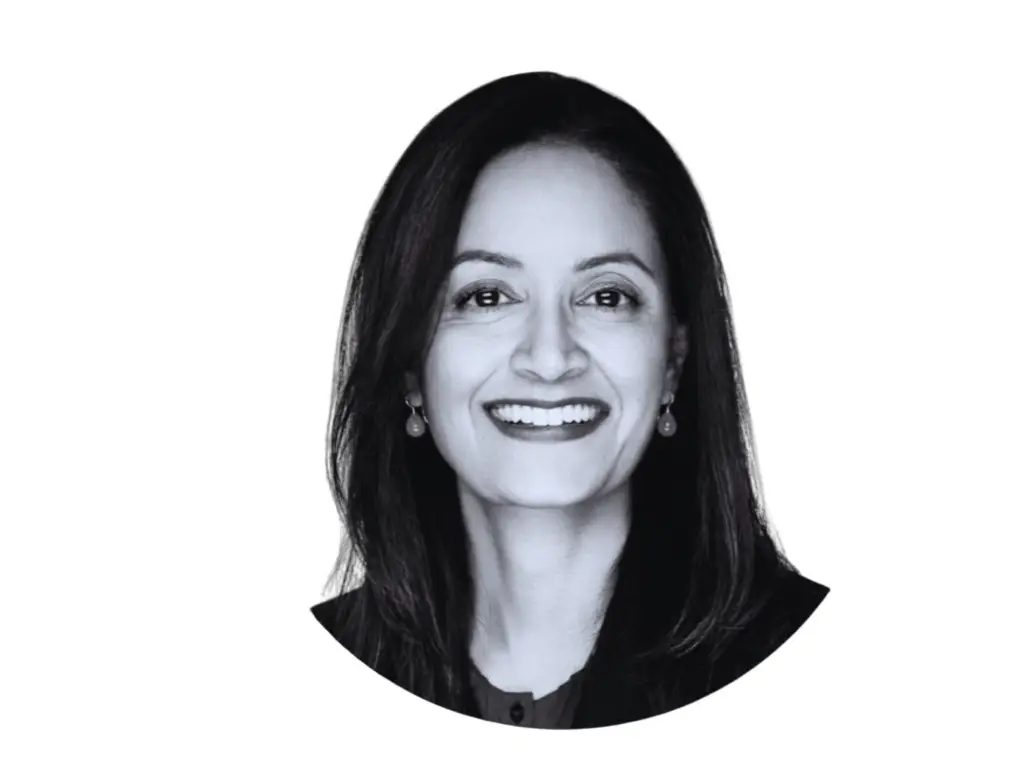
Interview with Kreena Govender, Co-Founder and Strategic Lead, BOLD Global Alliance for Women, Girls & Sport
Introduction
This interview with Kreena Govender, Co-Founder and Strategic Lead of the BOLD Global Alliance for Women, Girls & Sport (BOLD), provides a timely and critical perspective on the structural barriers, emerging opportunities, and systemic transformations required to advance the inclusion of women and girls with disabilities in sport. Drawing on global experience and cross-sector engagement, it highlights how sport can serve as a powerful pathway for empowerment, leadership, social inclusion and health—when intentionally designed to be safe, accessible, and grounded in equity.
1.Participation and barriers
Women and girls with disabilities remain significantly underrepresented in sports globally. From your perspective, what are the main structural barriers that limit their participation, and which strategies have proven most effective in overcoming them?
Women and girls with disabilities are not on the margins of sport because they lack interest or potential. They are being left behind and excluded because our systems have not been built with them in mind.
And inequality does not affect everyone in the same way. For many women and girls with disabilities, especially those from low-income communities, rural areas, marginalised racial or ethnic groups, or those living with health conditions such as HIV, the barriers are deeper and more complex. These intersecting realities shape access to opportunities, safety, and the ability not only to participate in and stay in sport, but also to benefit from it. And we know those benefits go far beyond physical and mental health. Sport can build confidence, restore dignity, and open up opportunity. But it does not stop there. It reaches into families, it shifts communities, and it helps us build societies that are more equal, more connected, and more human.
These barriers start early. In many parts of the world, including in high-and middle-income countries, girls with disabilities are excluded from physical education altogether because facilities are not accessible, teachers are not trained, or simply because they are not expected to take part. That exclusion continues into community sport, where transport is limited, costs are high, and opportunities are few.
Social norms also play a powerful role. Harmful ideas about gender and disability, whether it is overprotection, stigma, or assumptions about capability, continue to shape what is seen as possible for girls. At the same time, women and girls with disabilities face a heightened risk of gender-based violence, including within sport settings. This is why safeguarding, bodily autonomy, and access to sexual and reproductive health and rights are not optional; they are essential to participation.
And underpinning all of this is a lack of investment, evidence, and visibility. If women and girls with disabilities are not counted, they are not prioritised.
What we have seen, however, is that change is possible. And it starts with being intentional. When inclusive physical education is introduced early, when coaches are trained, and when spaces are accessible, safe, and respectful of girls’ rights and autonomy, participation grows. When safeguarding is taken seriously, girls stay. And when women with disabilities are in leadership, systems begin to shift.
For us at the BOLD Global Alliance for Women, Girls & Sport (BOLD)1 this is not just about opening doors or breaking down barriers. It is about reshaping the system and shifting power, so that women and girls with disabilities are not only included, but are able to participate fully, safely, and lead on their own terms.
2.Sport as a pathway to empowerment
How can participation in sport contribute to the empowerment, leadership, and social inclusion of women with disabilities, particularly in communities where both gender and disability stigma persist?
Sport can be incredibly powerful, but only when it is accessible, safe, and shaped by the women and girls it is meant to serve. At its best, sport creates space. Space to move, to be seen, to build confidence, and to connect with others. To be a part of a community – a movement. For many women and girls with disabilities, especially in communities where stigma around both gender and disability is strong, that space can be life-changing. It can shift how they see themselves and how their communities see them. And we are seeing this in small and powerful ways.
In Cameroon, for example, girls are coming together to play football on dusty, uneven fields, often with very little infrastructure, but with strong peer support and determination. These kinds of community-led spaces, like the ones highlighted through storytelling platforms such as Glorious Sport, show that what matters most is not perfect facilities but creating spaces where girls feel they belong and are supported in showing up. 2
In India, programmes like Maitrayana’s netball initiative have intentionally included girls with disabilities not by creating something separate, but by working with the girls themselves. Two girls with disabilities became mentors within the programme, helping coaches understand what inclusion looks like in practice. Over time, more girls joined, and the programme became something shaped by the community, not imposed on it.3
And in Europe, mixed-ability basketball teams are bringing young people with and without intellectual disabilities onto the same court. They train together, play together, and build relationships that challenge stigma in a very real, everyday way. It is simple, but powerful.4
These examples remind us that empowerment does not come from sport alone. It comes from how sport is designed and who shapes it- treating those at the centre with respect and dignity.
When girls with disabilities are supported in ways that respect their bodies, their choices, and their rights, sport can build confidence, leadership, and a real sense of belonging. It can open doors into education, livelihoods, and community leadership. It can also support bodily autonomy, including the ability to make decisions about their own health and lives.
But we also have to be honest. These are the same girls and women who often face higher levels of stigma, exclusion, and gender-based violence. So if sports spaces are not safe, if safeguarding is not taken seriously, then sports can reproduce the very inequalities we are trying to change.
This is why the approach matters. We have learned so much from the HIV movement, especially the principle of “nothing for us without us.” When women with disabilities are not just participants but leaders, coaches, and decision-makers, when they shape programmes and priorities, that is when real empowerment happens.
For us at BOLD, sport is not the end goal. It is a pathway. A way to build community, shift power, and grow a movement where women and girls with disabilities are not only included, but are leading change in their own lives and in their communities.
3.Inclusive sport systems
What policy or institutional changes are most needed for national sport systems, schools, and community programs to become truly inclusive of women and girls with disabilities?
If we are serious about inclusion, then we have to be honest. The problem is the system and the status quo. Too often, inclusion is treated as an add-on. Something nice to have. Something we speak about at conferences, but do not design for from the start. And if we are honest, this is not new. For more than a decade, since the start of the SDGs, we have seen commitment after commitment, resolution after resolution, all recognising the role of sport in advancing the rights and empowerment of women and girls, including women with disabilities.
But the reality has not kept pace. Action and investment have not followed. And for too many women and girls, nothing has really changed. And that is what we have to challenge. We have to challenge the status quo. It starts with policy, yes. But not policy in isolation. Policy that is funded, implemented, and held accountable. That means sport systems, education systems, and health systems need to intentionally include women and girls with disabilities from the beginning, not as an afterthought.
Schools matter. If girls with disabilities are excluded from physical education, they are excluded from sport for life. So we need safe and accessible spaces, trained teachers and approaches that recognise different bodies and different ways of participating.
At the community level, the barriers are very real. Transport. Cost. Equipment. Safety. These are not small issues; they are the difference between participation and exclusion. So programmes need to be designed around real lives, not ideal scenarios.
We also need to invest in people. Coaches, teachers, leaders. But more than that, we need to shift who holds power. We need to see women with disabilities not just participating, but leading, shaping decisions, setting priorities. That is where change really begins.
Safeguarding cannot be an afterthought. Women and girls with disabilities face higher risks of violence, including within sport. So, safe sport is not optional. Bodily autonomy is not optional. Access to SRHR is not optional. These are the foundations. But we also have to go further and be honest about power at the global level.
Because decisions are still being made in silos. At global fora like the Commission on the Status of Women. Across UN agencies like WHO, UN Women, UNESCO. And at the national level, across ministries of sport, health, education, and women’s affairs, which are not always speaking to each other. And we have to say the same to the big sporting bodies. The IOC. FIFA. International federations.
You cannot speak about legacy, about inclusion, about equity, and not invest in the systems that make inclusion real for women and girls with disabilities. Allyship means action, and it must be intersectional. It means resources. It means opening up leadership and decision-making spaces.
So yes, we need coordination. We need to break down silos. We need to work differently.
And this is where BOLD comes in. Because our role is not just to advocate but to convene. To bring people together across sectors, across issues, across regions, across lived experience as part of a BOLD community – and movement.
Because in the end, inclusion is not just about access. It is about power. And if we are not shifting power, then we are not really changing the system.
4.Lessons from Bold Global Alliance
Based on the work of Bold Global Alliance and its partners, are there examples or initiatives that demonstrate promising approaches to advancing opportunities for women with disabilities in sport?
At BOLD, we may be a very young organisation, just nine months old, but we have been intentional from the start about how we work and who we centre. We are backed by founders, staff, and advisors with deep experience across social and health justice, gender equality, sport for development, DEI, and the global health and development system. We understand both what is possible and where things are not working.
We are incubated by two equal partners, Health Innovation Exchange (HIEx)5 in Geneva and the Hillcrest AIDS Centre Trust (HACT)6 in South Africa. That matters because it keeps us connected to both global spaces and community realities.
We also have to be clear about the unprecedented moment we are in. The global health and development system is under extreme strain. We are seeing some of the deepest funding cuts and pushbacks we have ever faced, across health, education, gender equality, and community programmes, with DEI, women’s health, and SRHR taking some of the hardest hits.
And when resources shrink, they do not shrink evenly. They are pulled first from the spaces that serve women and girls, especially those from the most marginalised communities, including women and girls with disabilities. So this is not just a funding crisis. It is a growing equity crisis.
That is why we are doing things differently.
One of the most promising approaches we are seeing is at country level. Through our work with member states, we are supporting the establishment of interministerial coordination mechanisms that bring together ministries of women, youth, persons with disabilities, health, sport and education. Not as separate conversations, but as joint planning processes, with shared accountability. And importantly, we ensure that communities are in these spaces, shaping priorities and holding systems to account.
At the heart of BOLD is connection. We are working to level the playing field by linking what is decided globally with what is needed locally. Through our partnerships with HIEx and HACT, we are connecting policy spaces with frontline realities, so that decisions are informed by lived experience.
We are also addressing a very real gap at the global level. Too often, UN agencies, sport bodies and development partners are all working towards the same goals, but in parallel. At BOLD, we are working to bring these efforts together and hold institutions accountable for the commitments they have already made, including those under the 2030 Agenda. Because the commitments exist. What is missing is alignment, coordination, and the programmes and investments to turn them into reality.
Another key lesson is that inclusion must be intersectional. Women and girls with disabilities are not one group. Their realities are shaped by race, ethnicity, geography, sexuality, socio-economic status, and health, including HIV. And those at these intersections face the greatest barriers, so they must be at the centre of decision-making, and at the centre of how resources are prioritised.
We are also focusing on leadership. Supporting women with disabilities to step into roles as coaches, mentors, and decision-makers, and to influence how programmes are designed and how resources are allocated. Because when women with disabilities lead, systems begin to change.
And participation must be safe. Safeguarding, bodily autonomy, and access to health and rights, including sexual and reproductive health, are not separate issues. They are part of what makes participation possible.
So what we are building is not just programmes. It is a different way of working. One that connects, coordinates, and shifts power. Because this is not just about participation. It is about changing the system, with those most affected leading the way, guided by a principle we know works: nothing for us, without us.
How to cite: Govender, K. (2026). Women, girls with disabilities and sport: Participation, empowerment and systems change [Interview]. Integrativa Online DVCN Bulletin.
Contact Information
BOLD Global Alliance for Women, Girls & Sport
Website: https://boldglobalalliance.org/
Email: info@boldglobalalliance.org
Head Office: c/o Hillcrest AIDS Centre Trust (HACT). 26 Old Main Road. Hillcrest, KwaZulu-Natal 3650
Republic of South Africa
Geneva Liaison Office: c/o Health Innovation Exchange (HIEx). Campus Biotech Innovation Park
Avenue de Sécheron 15. 1202 Geneva, Switzerland
1 https://boldglobalalliance.org/
2 Glorious Sport, community storytelling on grassroots girls’ football initiatives: https://glorioussport.com/
3 Women Win, Maitrayana inclusive netball programme (India): https://playground.womenwin.org/advancing-disability-inclusion/
4 Inclusion Europe, Mixed Ability Sports Project: https://www.inclusion-europe.eu/sports-and-intellectual-disabilities-mixed-ability-project/